Sponsored Content
The manufacturing industry is undergoing a massive transformation. Smart technologies such as robotics, sensors, IoT, and digital twins, central to Industry 4.0, are being adopted across manufacturing plants, especially large corporations, to move toward data-first operations that are highly efficient, sustainable, and responsive to shifting market demands. And as…
Image by Editor
# Introducing Opal
Google Opal is a no-code, experimental tool from Google Labs. It is designed to enable users to build and share AI-powered micro-applications using natural language. The tool converts text prompts into visual, editable workflows. This enables users to create AI applications quickly and easily.
…
Image by Editor
# Introduction
For decades, Python's Global Interpreter Lock (GIL) has been both a blessing and a curse. It's the reason Python is simple, predictable, and approachable, but also the reason it's struggled with true multithreading.
Developers have cursed it, optimized around it, and even built entire architectures to dodge it.…
Sponsored Content
Training and maintaining AI models require a steady flow of high-quality, up-to-date data, especially from dynamic sources like search engines. Manually scraping Google, Bing, YouTube, or other search engine results pages involves challenges such as CAPTCHA, rate limits, and changing HTML structures.
For developers and data scientists building AI…
Sponsored Content
Is your team using generative AI to enhance code quality, expedite delivery, and reduce time spent per sprint? Or are you still in the experimentation and exploration phase? Wherever you are on this journey, you can’t deny the fact that Gen AI is increasingly changing our reality today. It’s…
Image by Editor
# Introduction
Agentic AI is becoming super popular and relevant across industries. But it also represents a fundamental shift in how we build intelligent systems: agentic AI systems that break down complex goals, decide which tools to use, execute multi-step plans, and adapt when things go wrong.
When building such…
Image by Author
# Introduction
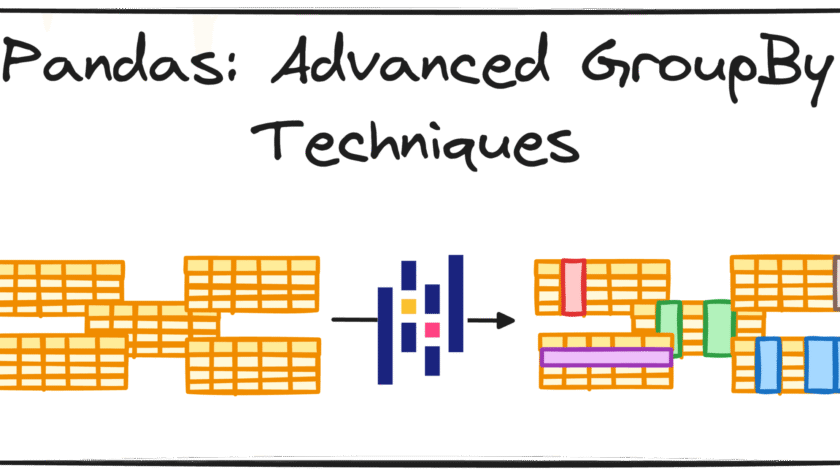
While groupby().sum() and groupby().mean() are fine for quick checks, production-level metrics require more robust solutions. Real-world tables often involve multiple keys, time-series data, weights, and various conditions like promotions, returns, or outliers.
This means you frequently need to compute totals and rates, rank items within each segment, roll…
Image by Editor
# Introduction
According to CrowdFlower’s survey, data scientists spend 60% of their time organizing and cleaning the data.
In this article, we’ll walk through building a data cleaning pipeline using a real-life dataset from DoorDash. It contains nearly 200,000 food delivery records, each of which includes dozens of features such…
Image by Author
# Introduction
There are numerous tools for processing datasets today. They all claim — of course they do — that they’re the best and the right choice for you. But are they? There are two main requirements these tools should satisfy: they should easily perform everyday data analysis operations and…
Image by Author
# Introduction
You've been coding in Python for a while, absolutely love it, and can probably write decorators in your sleep. But there's this nagging voice in your head saying you should learn TypeScript. Maybe it's for that full-stack role, or perhaps you're tired of explaining why Python is "totally…