Skip to content Skip to sidebar Skip to footer

Author page: admin

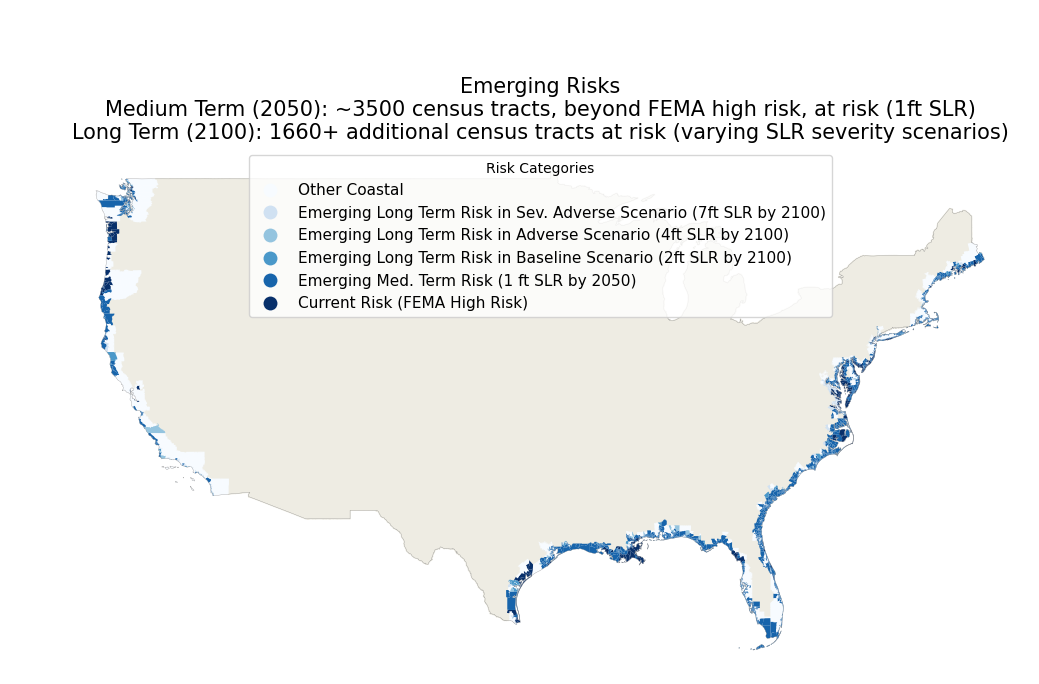
Impact of Rising Sea Levels on Coastal Residential Real Estate Assets | by Riddhisha Prabhu | Mar, 2024

Using scenario based stress testing to identify medium (2050) and long term (2100) sea level rise risks This project utilizes a scenario based qualitative stress testing approach to identify US coastal census tracts expected to adversely impacted by sea level rise (SLR) in the medium (2050) and long term (2100). One Baseline and two ‘plausible…

Read More

Meet Swin3D++: An Enhanced AI Architecture based on Swin3D for Efficient Pretraining on Multi-Source 3D Point Clouds

Point clouds serve as a prevalent representation of 3D data, with the extraction of point-wise features being crucial for various tasks related to 3D understanding. While deep learning methods have made significant strides in this domain, they often rely on large and diverse datasets to enhance feature learning, a strategy commonly employed in natural language…

Read More

How to Implement ChatGPT with OpenAI API in Python Synchronously and Asynchronously | by Lynn G. Kwong | Mar, 2024

Learn to use AI to boost the efficiency of your business Image by geralt on PixabaySince the advent of ChatGPT, it has brought tremendous shock to human society. Especially for us developers, our lives have been reshaped dramatically because of it. ChatGPT can answer all kinds of technical and non-technical questions correctly, accurately, and efficiently.…

Read More

Meet CoLLaVO: KAIST’s AI Breakthrough in Vision Language Models Enhancing Object-Level Image Understanding

The evolution of Vision Language Models (VLMs) towards general-purpose models relies on their ability to understand images and perform tasks via natural language instructions. However, it must be clarified if current VLMs truly grasp detailed object information in images. The analysis shows that their image understanding correlates strongly with zero-shot performance on vision language tasks.…

Read More

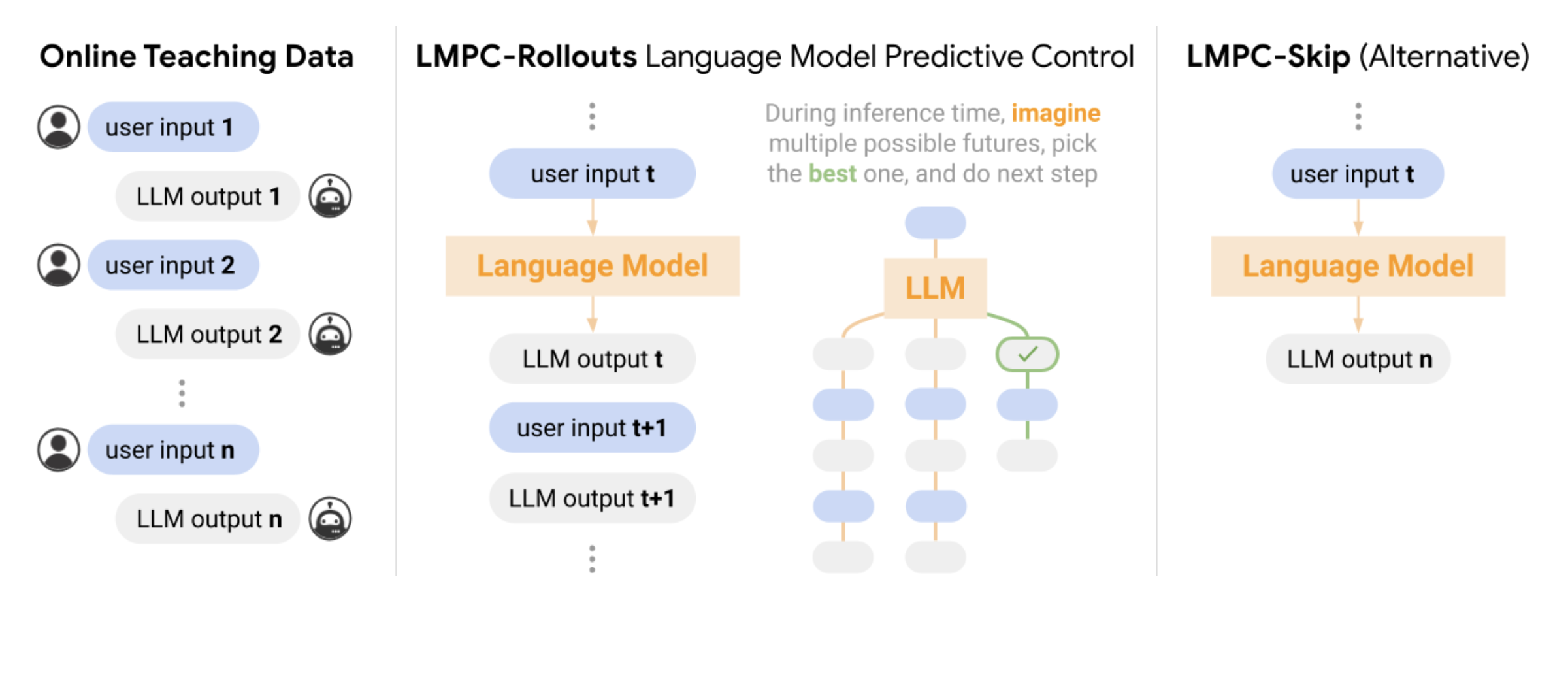
This AI Research from Google DeepMind Unlocks New Potentials in Robotics: Enhancing Human-Robot Collaboration through Fine-Tuned Language Models with Language Model Predictive Control

In robotics, natural language is an accessible interface for guiding robots, potentially empowering individuals with limited training to direct behaviors, express preferences, and offer feedback. Recent studies have underscored the inherent capabilities of large language models (LLMs), pre-trained on extensive internet data, in addressing various robotics tasks. These tasks range from devising action sequences based…

Read More