Image by Editor
# The Value of Docker
Building autonomous AI systems is no longer just about prompting a large language model. Modern agents coordinate multiple models, call external tools, manage memory, and scale across heterogeneous compute environments. What determines success is not just model quality, but infrastructure design.
Agentic Docker represents a…
Sponsored Content
The Voice of AI Innovation
In the rapidly evolving landscape of artificial intelligence, few voices carry as much weight and credibility as Bindu Reddy. As the CEO and Co-Founder of Abacus.AI, Reddy has positioned herself at the forefront of the AI revolution, building what she calls "the…
Image by Editor
# Introduction
Very recently, a strange website started circulating on tech Twitter, Reddit, and AI Slack groups. It looked familiar, like Reddit, but something was off. The users were not people. Every post, comment, and discussion thread was written by artificial intelligence agents.
That website is Moltbook. It’s a social…
Image by Author
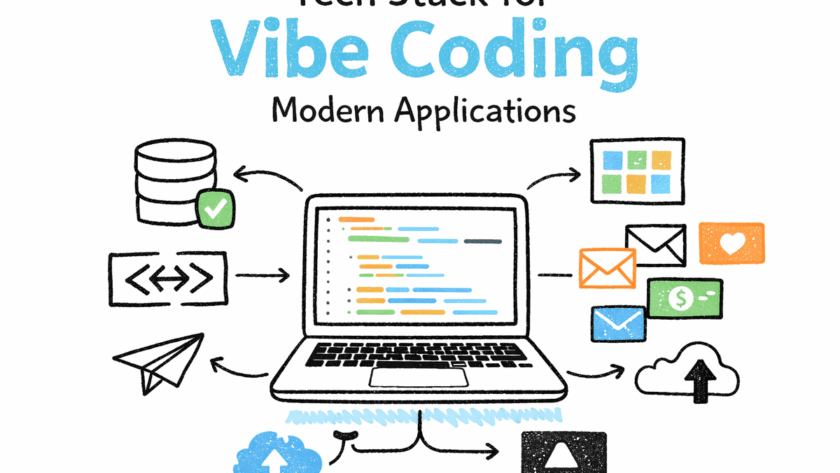
I used to hate vibe coding. I believed I could write better code, design cleaner systems, and make more thoughtful architectural decisions on my own. For a long time, that was probably true. Over time, things changed. AI agents improved significantly. MCP servers, Claude skills, agent workflows, planning-first execution, and…
Image by Editor
# The Fragile Pipeline
The gravitational pull of state of the art in modern machine learning is immense. Research teams and engineering departments alike obsess over model architecture, from tweaking hyperparameters to experimenting with novel attention mechanisms, all in the pursuit of chasing the latest benchmarks. But while building a…
Image by Author
# Introduction
For the past two years, the AI industry has been locked in a race to build ever-larger language models. GPT-4, Claude, Gemini: each promising to be the singular solution to every AI problem. But while companies competed to create the biggest brain, a quiet revolution was happening in production…
Image by Author
# Introduction to Keeping Secrets
Storing sensitive information like API keys, database passwords, or tokens directly in your Python code is dangerous. If these secrets are leaked, attackers can break into your systems, and your organization can suffer loss of trust, financial and legal consequences. Instead, you should externalize secrets…
Image by Author
# Introduction
Python is the default language of data science for good reasons. It has a mature ecosystem, a low barrier to entry, and libraries that let you move from idea to result very quickly. NumPy, pandas, scikit-learn, PyTorch, and Jupyter Notebook form a workflow that is hard to beat…
Image by Author
# Introduction
When building machine learning models with moderate to high complexity, there is an ample range of model parameters that are not learned from data, but instead must be set by us a priori: these are known as hyperparameters. Models like random forest ensembles and neural networks have a…
Image by Editor
# Introduction
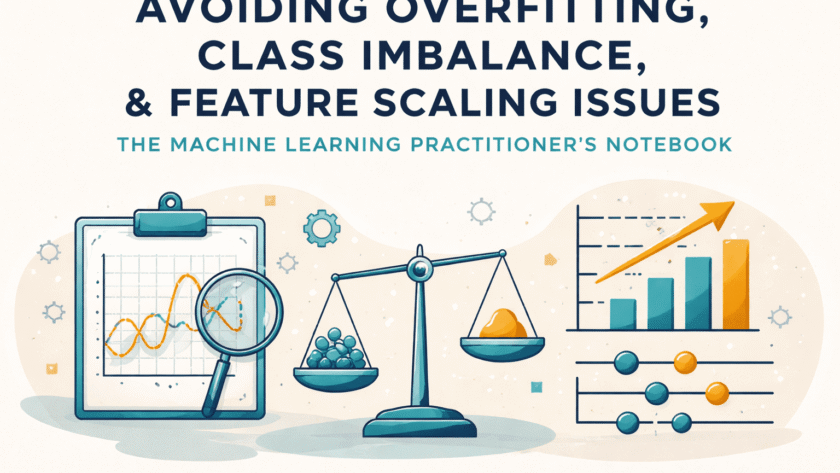
Machine learning practitioners encounter three persistent challenges that can undermine model performance: overfitting, class imbalance, and feature scaling issues. These problems appear across domains and model types, yet effective solutions exist when practitioners understand the underlying mechanics and apply targeted interventions.
# Avoiding Overfitting
Overfitting occurs…